
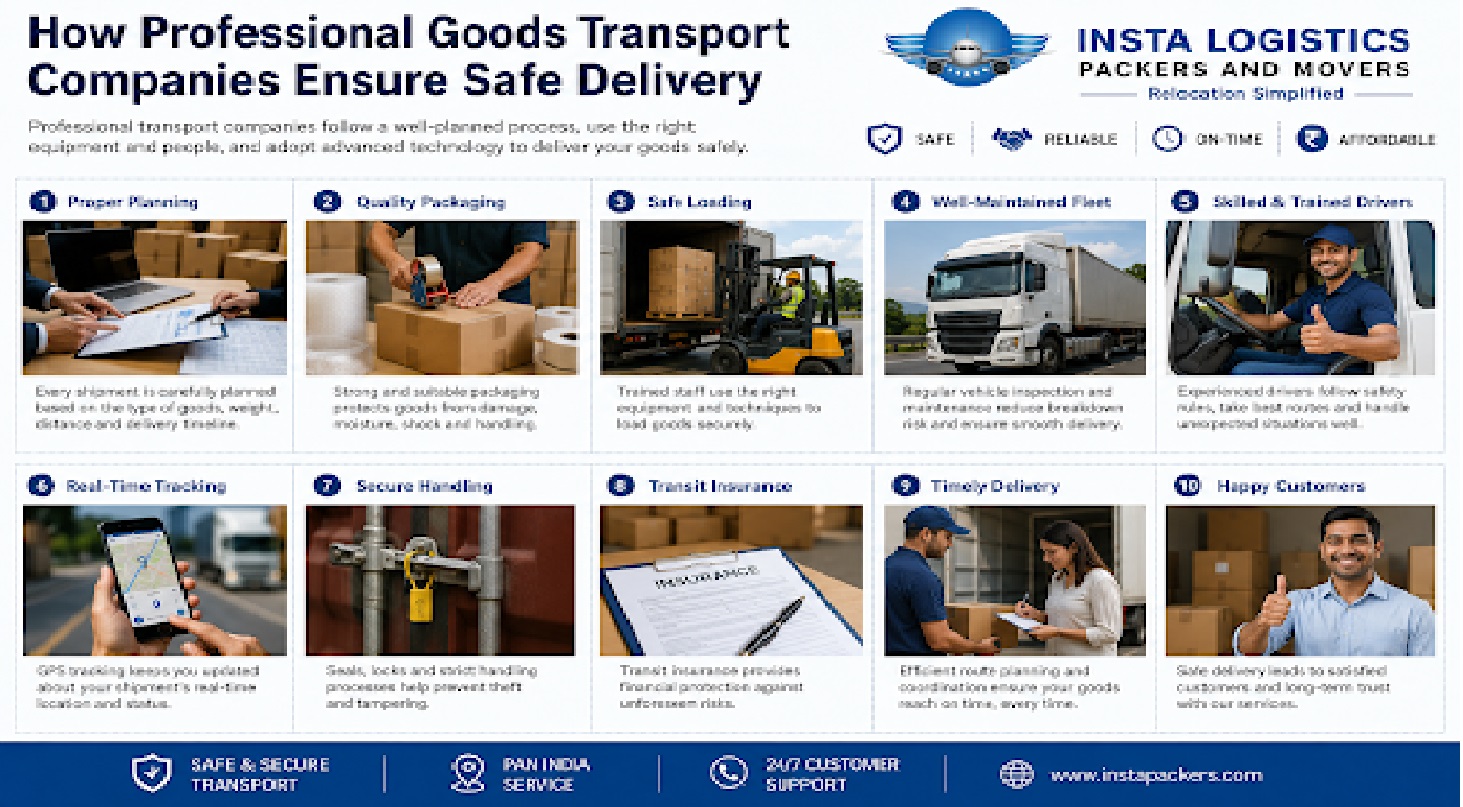
When businesses send goods from one city to another, their biggest concern is not usually the transportation cost. The first question most customers ask is simple: "Will my goods reach safely?"
It does not matter whether the shipment contains industrial machinery, electronic products, retail inventory, construction materials, or commercial cargo. Every shipment represents money, effort, and customer expectations. A damaged delivery can create problems far beyond the cost of the goods themselves. It can delay projects, disrupt production schedules, damage business relationships, and even result in the loss of future customers.
This is why professional goods transport companies invest heavily in safety measures. The best transport providers understand that successful transportation is not simply about moving goods from one location to another. It is about making sure the cargo reaches its destination in the same condition in which it was loaded.
Across India, thousands of trucks travel through highways, industrial corridors, urban roads, and rural routes every day. These vehicles face traffic congestion, changing weather conditions, road diversions, toll delays, mechanical issues, and many other challenges. Despite these obstacles, professional logistics companies consistently deliver goods safely because they follow well-planned systems and proven transportation practices.
Companies looking for reliable transporters in Delhi often focus on delivery safety as much as pricing because even a small mistake during transportation can lead to significant financial losses. Businesses operating in manufacturing hubs, industrial parks, and commercial zones understand that safe delivery is essential for maintaining smooth operations.
Safe Delivery Starts Long Before the Truck Moves
Many people think transportation begins when a truck leaves the warehouse. In reality, safe transportation starts much earlier.
Before accepting a shipment, experienced logistics professionals carefully study the nature of the goods. A shipment containing glass products requires completely different handling compared to steel pipes or industrial equipment. Similarly, transporting expensive electronic devices requires more protection than transporting construction materials.
Professional transport companies assess several factors before dispatching a vehicle:
- Type of goods
- Weight of the shipment
- Dimensions of the cargo
- Fragility of the items
- Distance to destination
- Road conditions
- Delivery timeline
- Weather forecasts
- Loading requirements
This planning stage helps prevent many transportation problems before they occur.
For example, if a company is transporting heavy industrial equipment from Delhi to Mumbai, the transport provider may recommend a specialised trailer instead of a standard truck. Although the specialised vehicle may cost slightly more, it significantly reduces the risk of cargo damage during transit.
This attention to detail is one reason why experienced logistics providers often achieve much better delivery outcomes than unorganised transport operators.
Understanding the Real Risks During Transportation
To understand how professional transport companies ensure safe delivery, it is important to first understand the risks that goods face during transportation.
One of the most common risks is improper loading. Many cargo damages occur not because of accidents but because the shipment was loaded incorrectly. When goods are not properly balanced inside the vehicle, they can shift during sudden braking, sharp turns, or rough road conditions. Even minor movement inside the truck can cause significant damage to sensitive products.
The weather is another major challenge. India experiences extreme weather conditions throughout the year. During the monsoon season, heavy rainfall can affect transportation schedules and increase the risk of water damage. During summer months, excessive heat can affect certain products, while winter fog can create visibility issues for drivers.
Traffic congestion also remains a significant concern in many regions. Trucks moving through metropolitan areas often face delays that can affect delivery schedules. Professional transport companies reduce these risks by using route planning systems and monitoring traffic conditions in real time.
Cargo theft, although less common than in previous decades, continues to be a concern for high-value shipments. This is why modern transport companies use GPS tracking systems, driver verification procedures, route monitoring tools, and secure documentation practices.
Mechanical failures can also create serious problems. A truck breakdown on a highway can delay deliveries and expose cargo to unnecessary risks. Reputable transport companies, therefore, invest heavily in preventive vehicle maintenance programs.
Businesses searching for dependable transporters in Noida frequently ask about vehicle maintenance schedules because a well-maintained fleet plays a critical role in ensuring safe and timely delivery.
Why Proper Packaging Matters More Than Most People Realise
Ask any experienced logistics professional about the secret to damage-free transportation, and many will give the same answer: proper packaging.
Packaging is the first layer of protection for any shipment.
Even the best driver and the safest vehicle cannot fully protect goods that have been packed poorly.
Professional transport companies often recommend specific packaging methods depending on the type of cargo. Fragile products may require foam cushioning, bubble wrapping, edge protection, wooden crating, or palletised loading systems. Heavy machinery may require custom supports and reinforced securing mechanisms.
Waterproof packaging is particularly important during long-distance transportation. Sudden weather changes can occur during transit, especially when goods travel across multiple states.
Proper packaging offers several advantages:
- Reduces impact damage
- Protects against vibration
- Prevents scratches and dents
- Improves stacking safety
- Minimises moisture exposure
- Reduces handling risks
Many businesses underestimate the importance of packaging until they experience a damaged shipment. After a few costly incidents, most companies quickly realise that investing in proper packaging is much cheaper than replacing damaged goods.
The Role of Professional Drivers in Safe Transportation
Technology has transformed the transportation industry, but experienced drivers remain one of the most important factors in delivery safety.
A skilled driver does much more than operate a vehicle.
Experienced drivers understand how different cargo types behave during transit. They know how to handle sharp turns, steep gradients, sudden braking situations, and difficult weather conditions while protecting the shipment.
Professional logistics companies provide regular safety training to their drivers. Training programs often include:
- Defensive driving techniques
- Cargo safety procedures
- Emergency response protocols
- Vehicle inspection routines
- Route management practices
These practices significantly reduce transportation risks.
According to information shared by the official Ministry of Road Transport and Highways, road safety and driver awareness continue to be critical priorities for improving transportation efficiency across India. You can explore transport safety initiatives through the Ministry's official website
Similarly, businesses involved in interstate goods transportation can benefit from understanding compliance requirements through the official GST Portal.
Companies operating in commercial hubs such as Gurgaon often prefer experienced transporters in Gurgaon because trained drivers and organised logistics systems contribute significantly to safe and timely deliveries.
Technology Is Making Transportation Safer Than Ever
The transportation industry today looks very different from what it was ten years ago.
Modern logistics companies now use technologies that provide visibility throughout the transportation journey.
GPS tracking allows customers to monitor shipments in real time. Fleet management software helps companies track vehicle performance and maintenance schedules. Route optimisation systems identify faster and safer delivery routes.
These technologies help transport companies:
- Reduce delays
- Improve security
- Monitor driver performance
- Increase delivery accuracy
- Improve customer communication
- Minimise transportation risks
Customers no longer have to wonder where their shipment is. They can often track the movement of their goods from pickup to final delivery.
This increased transparency has become one of the biggest advantages of professional transportation services in recent years.